Key Takeaways
- AMD has launched its highest-end laptop GPU, the RX 7900M, challenging Nvidia’s dominance in this space and even threatening the RTX 4080 in benchmarks.
- Power efficiency is crucial for laptops, impacting both battery life and cooling. AMD’s RX 7900M seems to be less efficient than Nvidia’s second-fastest laptop GPU.
- The RX 7900M’s power consumption is higher than the RTX 4080, and its performance increase does not justify the significant increase in power consumption, making it less efficient overall. This could hinder AMD’s ability to compete with Nvidia in high-end laptop GPUs.
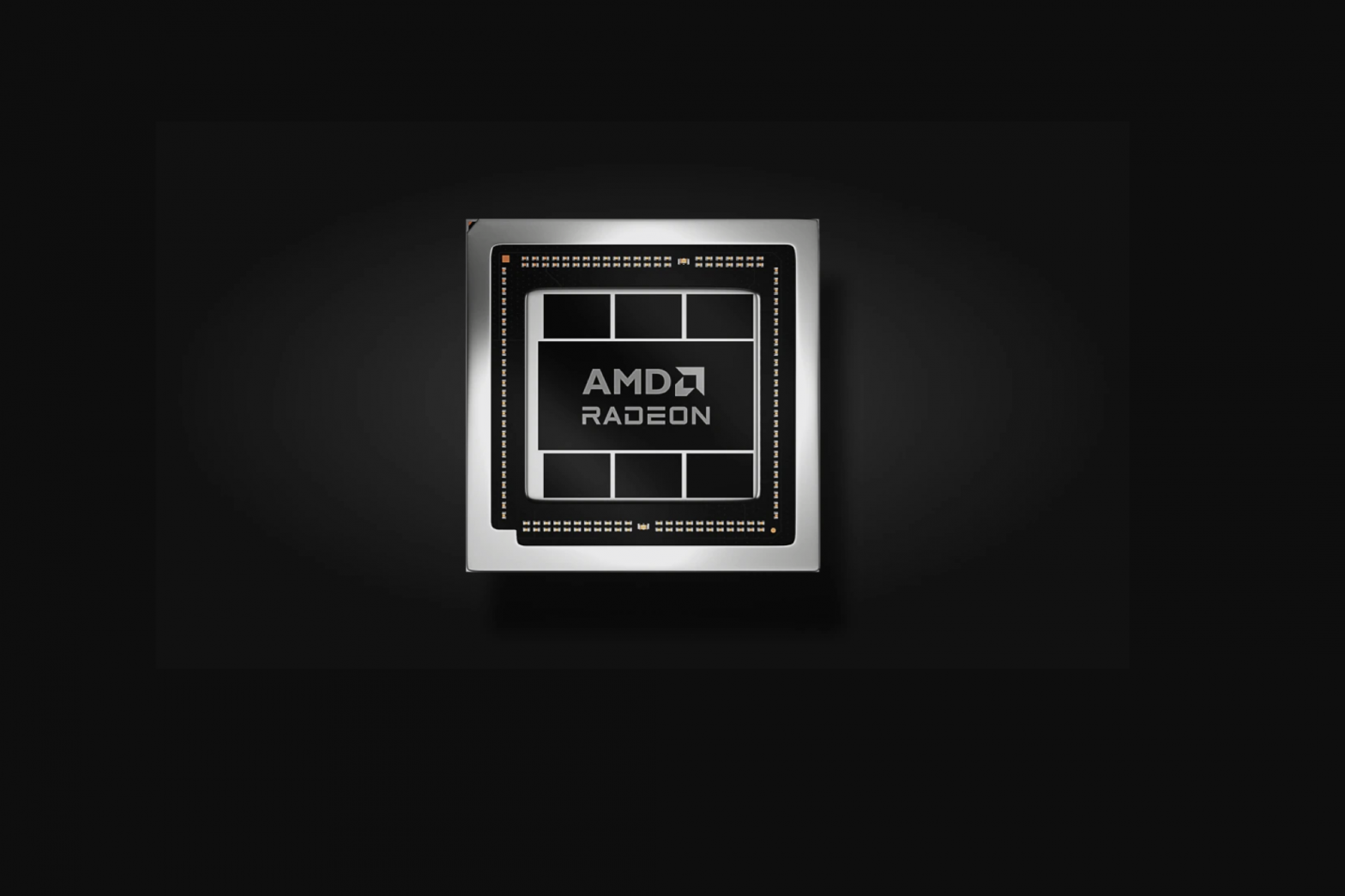
AMD has never really been a player in high-end laptop GPUs and has effectively ceded this space to Nvidia for years, but that’s all changed with the company’s latest RX 7900M GPU. A cut-down version of the RX 7900 GRE, it’s the highest-end laptop card AMD has launched ever, threatening even Nvidia’s RTX 4080 in first-party benchmarks. It could really shake things up if AMD gets enough design wins to get the RX 7900M off the ground.
However, AMD’s RX 7000 series in general has never really been that good when it comes to power efficiency, which is incredibly important for laptops. Although it’s true that both great GPUs and not-so-great GPUs configured for desktops can become even more efficient and palatable when tweaked for laptops, some key specs for the RX 7900M (buried under marketing slides and footnotes) reveals that AMD might have to lose hard in power efficiency to just catch up to Nvidia’s second-fastest laptop GPU.
Why power efficiency is so crucial for laptops

On the surface, you might think power efficiency only matters for lowering the electricity bill and being more environmentally friendly. While those are good reasons to pursue power efficiency, in laptops there are far more important reasons than just trying to be green. In fact, power efficiency is practically everything when it comes to laptops, and it’s why Nvidia right now has such a commanding lead over AMD.
Generally speaking, power efficiency is crucial for battery life. The more efficient a processor is, the more battery life you get while doing a set amount of work. This isn’t such a big deal for gaming laptops since you’re probably not gaming on battery and you don’t expect much battery life in general, though good idle power management can make a big difference for the user experience. For example, even my Asus ROG Zephyrus G14 2022 gets me several hours of battery life because the discrete GPU can idle very well. The RX 7900M is probably fine in this regard.
The more important concern is cooling. Virtually all power coursing through the silicon veins of a processor becomes heat, so to supply that power a graphics card will not only need more power stages but also better cooling to get rid of the heat. On desktop, AMD is a fair bit behind Nvidia, and while efficiency depends on the game, generally Nvidia is about 10% to 20% more efficient. So, how is it shaping up in laptops? Well, it’s not looking great for AMD based on what we know so far.
AMD might be losing hard to Nvidia in efficiency

According to AMD, the RX 7900M is 7% faster on average than the RTX 4080, but it’s really important to figure out how they came to these figures. While any desktop GPU even from different brands will perform about the same, a laptop GPU in one brand’s model can perform very differently to one in another brand’s device due to differing power limits.
Deep within the footnotes of AMD’s press release, I was able to find that the RX 7900M was tested in the Alienware m18 (which was just announced), and the RTX 4080 mobile (which is a totally different GPU than the desktop version) was benchmarked in the Aorus 17H BXF. The RTX 4080 in the Aorus 17H BXF is rated for a 150 watt TDP, and indeed it does run at 150 watts under the gamer-oriented power profile according to Kitguru.
The Alienware m18 is however an unknown quantity since the model with the Ryzen 9 7945HX and RX 7900M hasn’t come out yet, but we do know one key specification already: TDP. While TDP doesn’t always equal power consumption, usually it does, or it’s at least close enough for our purposes.
What’s immediately concerning about the RX 7900M’s TDP is that it starts at 160 watts, already 10 watts higher than the RTX 4080. But what’s even more concerning is the fact that it goes up to 200 watts with AMD’s SmartShift Max technology, which basically juggles CPU and GPU power to try to get the best mix of the two for the highest framerate possible. 33% more power (assuming it was 200 watts on average) for 7% more performance means the RX 7900M is just 80% as efficient as the RTX 4080.
AMD didn’t mention whether SmartShift Max was enabled for its benchmarks, but I would probably guess that it was enabled since AMD was completely silent on power consumption. If the 7900M did beat the 4080 and only used a few extra watts to do it, that would be an achievement for AMD to brag about. But because AMD isn’t boasting, that probably means there’s nothing to boast about in the first place.
AMD can’t challenge Nvidia in laptops if its GPUs are this far behind in efficiency
Ultimately, this issue could prove to be a big obstacle for AMD if it actually wants to challenge Nvidia in high-end mobile GPUs for once. If the RX 7900M is already running at nearly 200 watts, it’s kind of hard to expect a faster card to come out. Adding more cores will increase efficiency and by extension performance under the same power limit, but not by much. The RTX 4090 mobile in high-end laptops consumes about 220 to 250 watts, and it’s well ahead of the RTX 4080 and the RX 7900M. Can AMD really challenge the RTX 4090 in laptops?
I think this venture for AMD is going to be pretty challenging even with its SmartShift technology and all the other stuff they can do when a laptop uses both a Ryzen CPU and a Radeon GPU. AMD is already disadvantaged simply from being absent in high-end laptop graphics until now, and it’s coming into the segment with what appears to be a worse GPU. The RX 7900M could be worthwhile if AMD is following it up with a much more efficient GPU in the RX 8000 series, but given that Nvidia has been ahead of AMD in efficiency for about a decade now, I’m skeptical.